
Services
Swimming Pool Removal
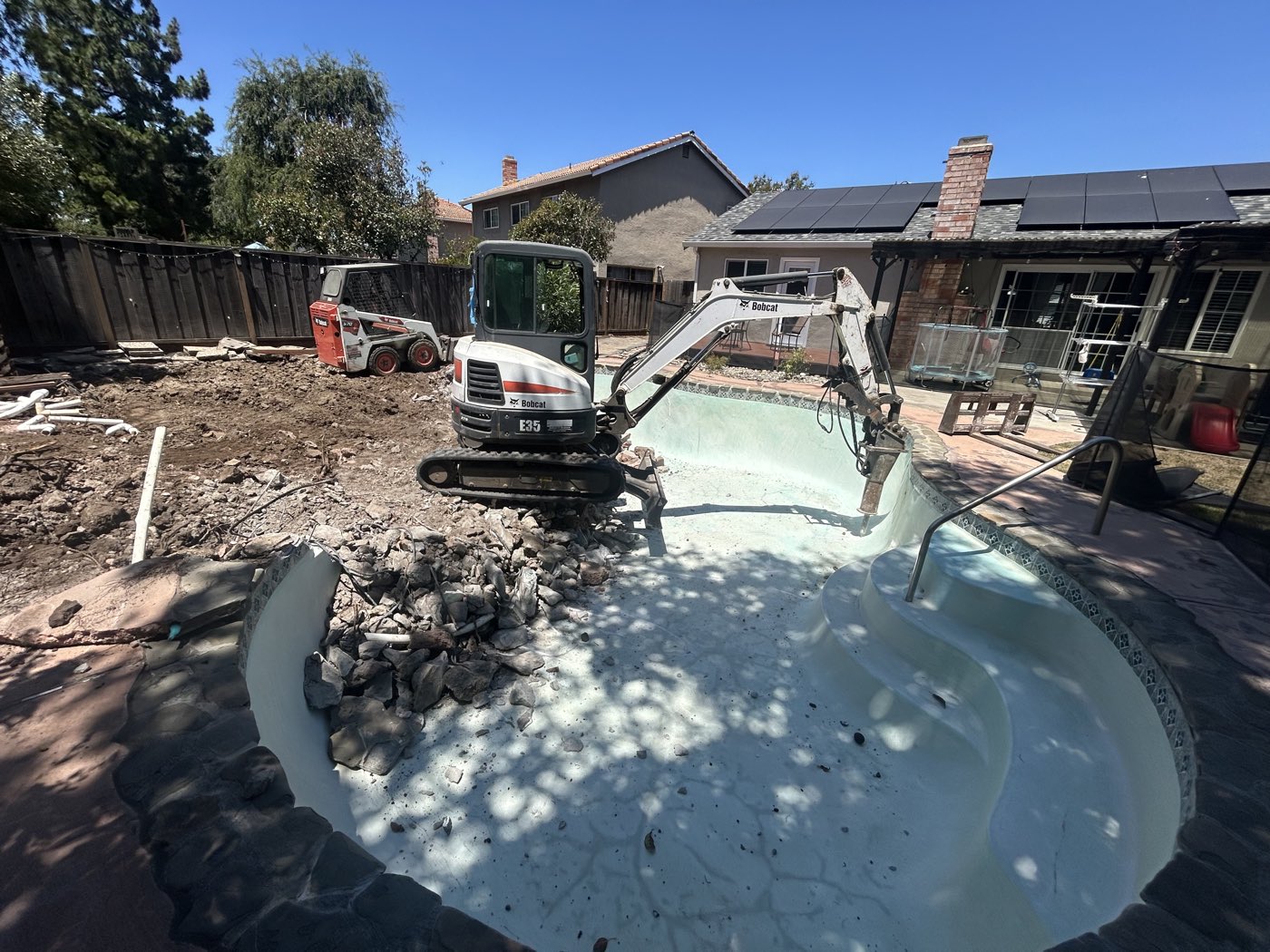
Every pool removal comes down to three stages: opening up the shell, taking out however much concrete your project calls for, and putting the ground back together so the yard is actually usable afterward. Which combination fits your property depends on your city's requirements and what you're planning for the space — Terry walks through the options with you during your free estimate.
Stage 1 — Partial or cave-in demolition
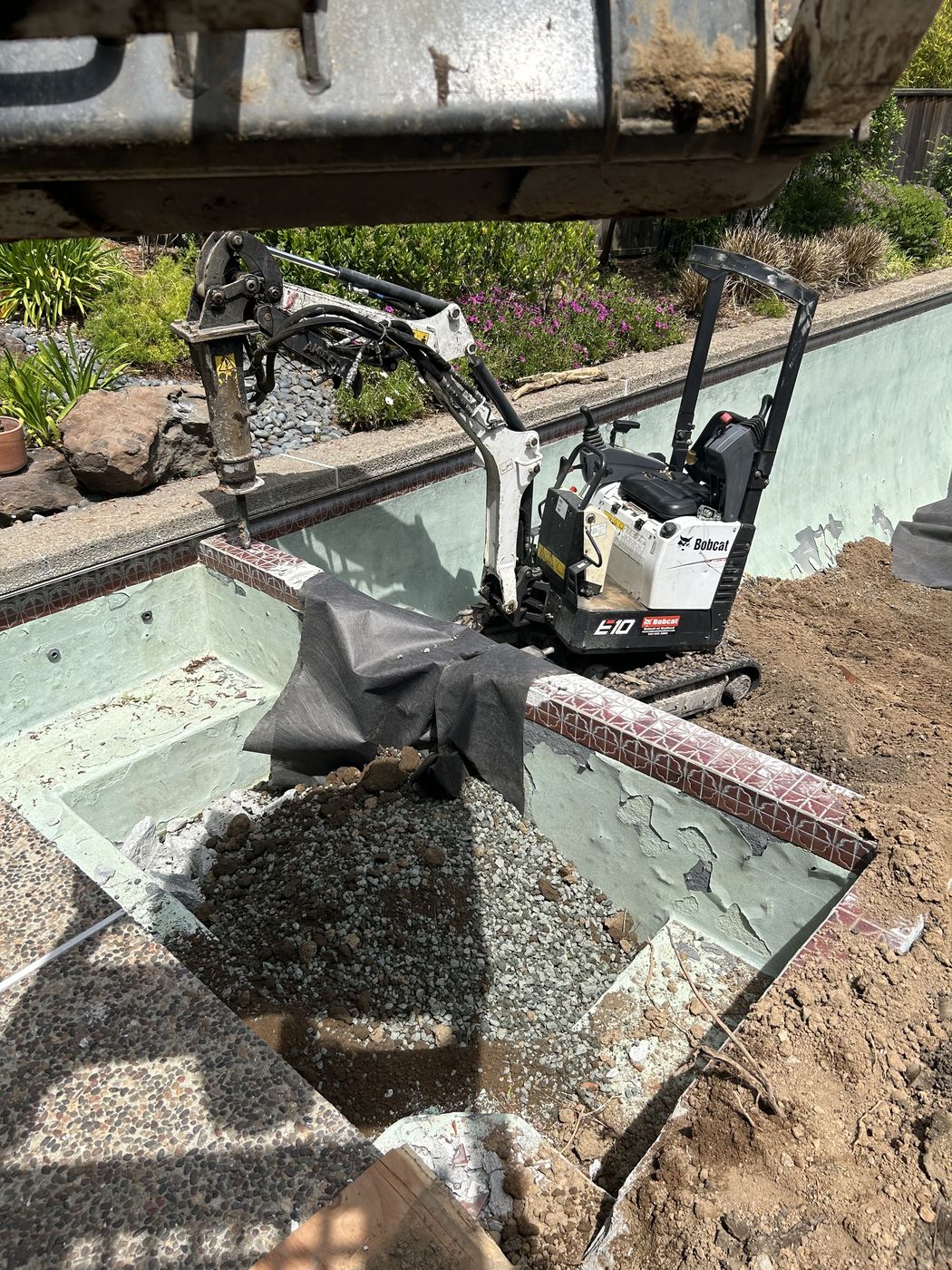
The most common starting point. The upper bond beam and coping — typically the top 18 to 36 inches of the shell — are broken up, and large holes are punched through the remaining concrete so groundwater can't collect underneath after backfill. From there, you have two paths:
- Cave-in: the most budget-friendly option. Only the top portion comes out; the rest of the shell is broken up and left in place, buried under compacted backfill.
- Partial removal: more concrete is broken up and reduced than a straight cave-in, balancing cost against stricter city requirements.
Good fit if…
You want the most cost-effective option and you're not planning heavy construction directly over the old pool footprint. Whether cave-in or partial removal applies to your property depends on your city's permit requirements, confirmed during the estimate and permitting process.
Stage 2 — Complete pool removal
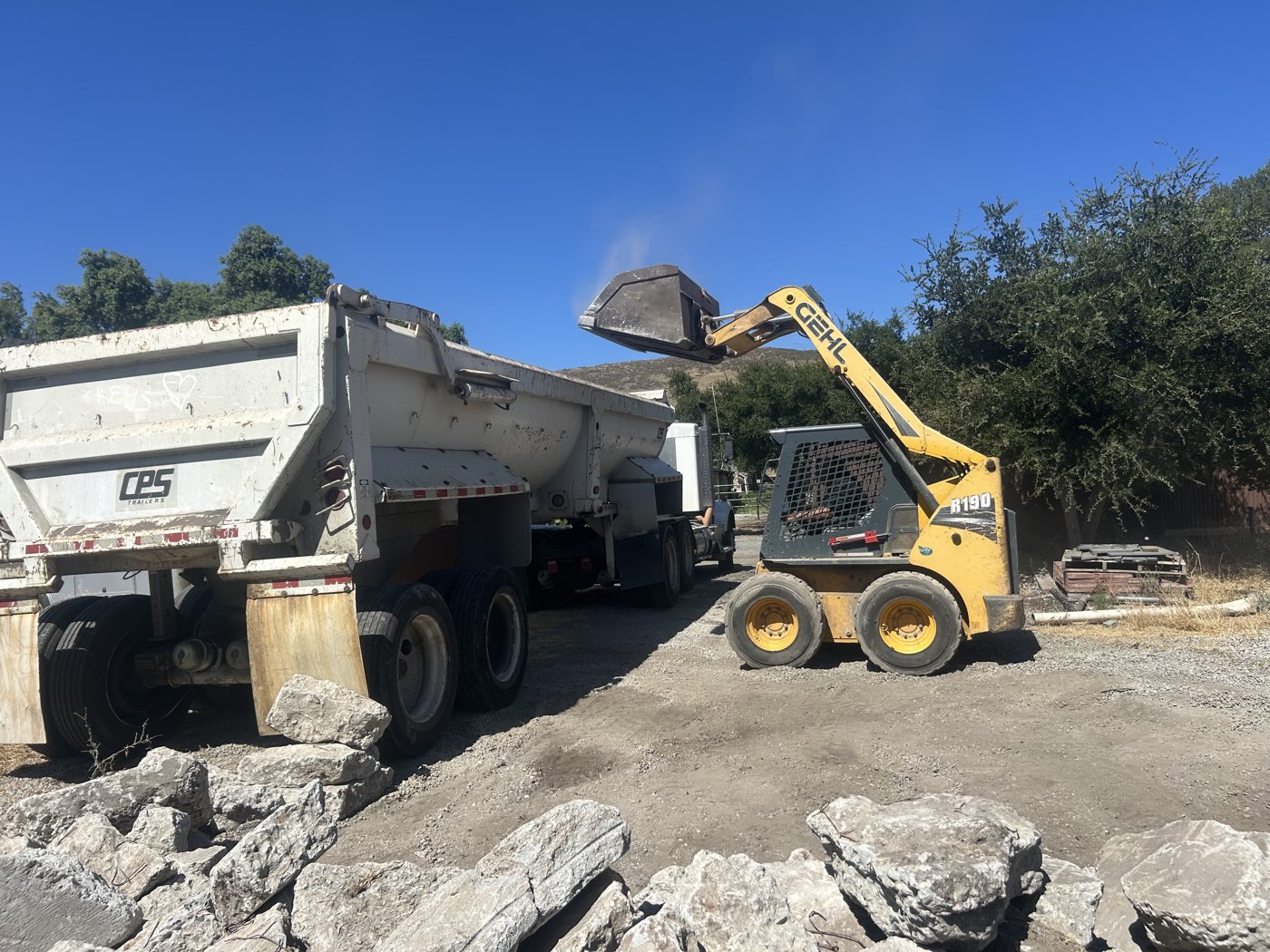
The full job: the entire concrete shell — walls, floor, and bond beam — is broken into haulable pieces and extracted, with every load of concrete and rebar leaving your property in our own trucks. Nothing old stays buried, which matters if you're planning to build over the footprint later.
Good fit if…
You're planning a structure (like an ADU) directly over the old pool footprint, or your city code requires full extraction rather than cave-in or partial removal.
Stage 3 — Backfill and compaction
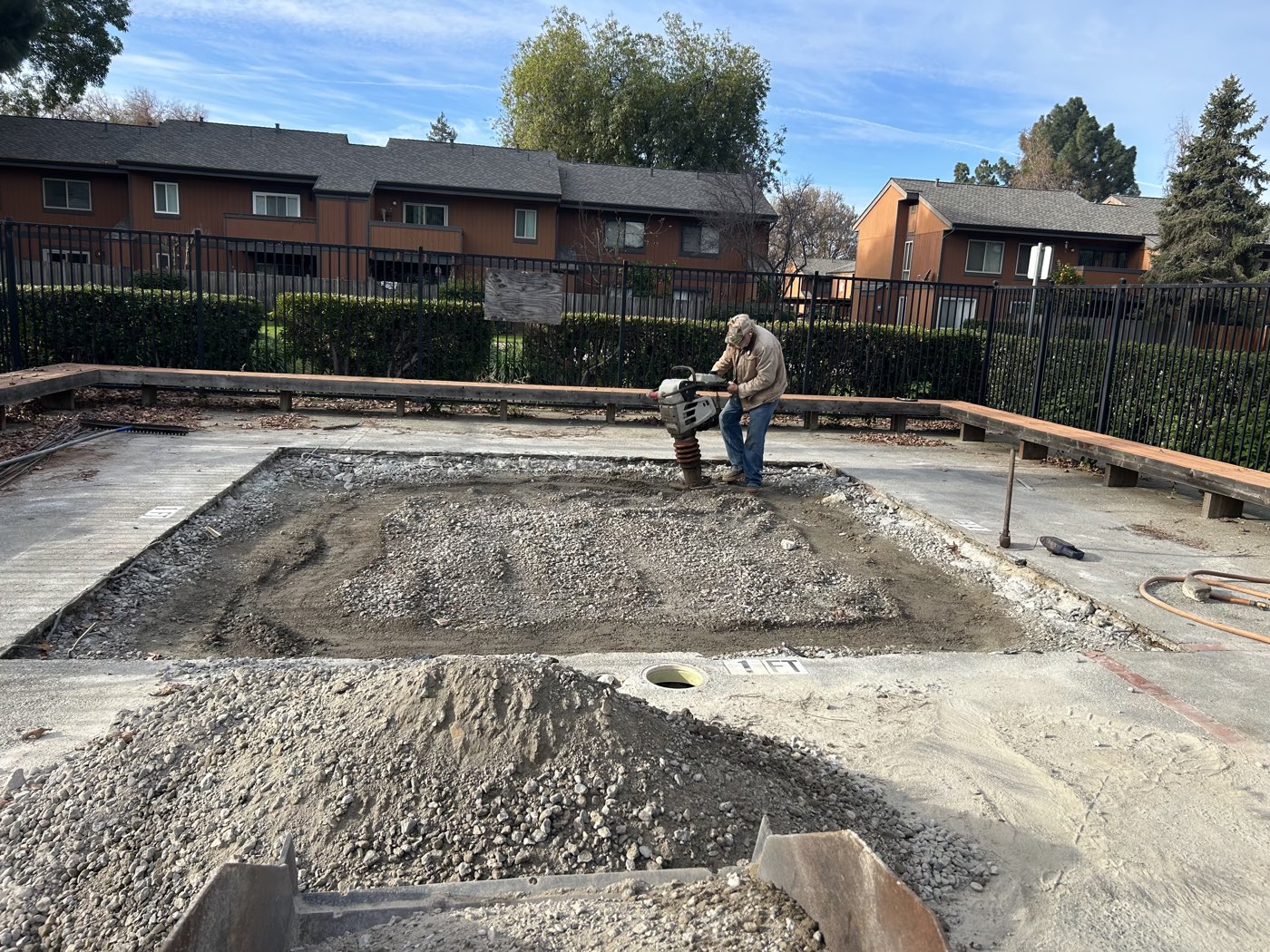
This is the stage that determines whether your yard stays flat and usable or starts sinking a year later. Soil is added back into the cavity in shallow layers — not dumped in all at once — and each layer is compacted with a jumping-jack tamper before the next one goes in. Working layer by layer like this is what keeps the ground stable enough for grass, a garden, a patio, or a future structure.
Why it matters
Skipping proper compaction is the single biggest cause of a sunken yard after pool removal. Final grading and a city inspection sign-off follow once backfill is complete.
Every property is different. Permit requirements, allowed removal methods, and drainage needs vary by city and by property. We confirm the specifics for your job during your free estimate and the permitting process — nothing here should be taken as a guarantee of what your city or property will require.
Pool removal questions
Frequently asked questions
Most residential jobs take a few days on site once a permit is approved. Permitting timelines vary by city; we'll give you a realistic estimate for your property during your free quote.
It depends on the equipment your project needs, but 35 years of working in South Bay backyards means tight side yards and awkward layouts rarely rule a project out. We'll assess your specific access during the estimate.
Pool removal generally requires a permit and inspection, and requirements vary by city. We handle the permitting process for the jobs we take on — your specific city's requirements are confirmed as part of your estimate.
It depends on your city's code and what you're planning for the space afterward. Cave-in and partial removal cost less; complete removal is generally required if you're planning to build directly over the old footprint. We'll recommend a fit for your property and budget, not just the easiest option to sell.
Concrete and rebar removed from the shell are loaded directly into our own trucks and hauled off-site — no dumpster sitting in your driveway for weeks.
Holes are punched through any remaining concrete before backfill so groundwater can't collect and pool underground. Broader property drainage needs are assessed during your estimate.
Backfill placed and compacted in shallow layers settles evenly. Backfill dumped in all at once tends to settle unevenly over time, which is the most common cause of a sunken yard after pool removal.
Once backfill, compaction, and grading are complete and signed off, the space is generally ready for landscaping. Whether it can support a structure like an ADU depends on the removal method used and your city's engineering requirements — that's a question for your city and a licensed engineer, not something we can promise on the website.
Also working on the property?
Related services
Ready to see what your yard could become?
Get a free estimate and find out what removal costs for your specific property — no pressure, no obligation.
Call (408) 459-2682